Jun 22nd 2026
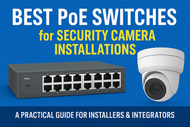
Best PoE Switches for Security Camera Installations
Index
Best PoE Switches for Security Camera Installations
A Practical Guide for Installers & Integrators
Brooklyn Low Voltage Supply
1.Why PoE Switches Matter in Security Camera Systems
In IP surveillance, the PoE switch is not just a network accessory - it is the power source, traffic controller, and reliability backbone of the entire camera system.-
-
- An underpowered switch
- A switch not designed for 24/7 video traffic
- A network device with no room for future growth
-
At BLVS, we frequently help customers troubleshoot camera issues that are ultimately caused by improper PoE switch selection, not the cameras themselves.
2.Key PoE Requirements for Security Cameras
Not all PoE switches are created equal.
Surveillance systems place constant load on both power and bandwidth, which makes certain features critical.
A. PoE Power Budget (Most Common Failure Point)
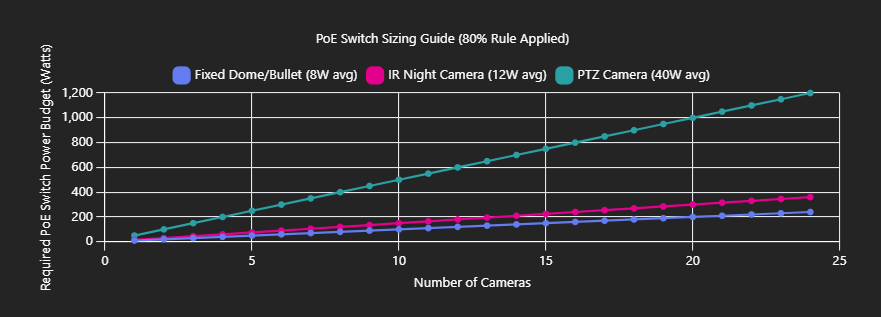
Every PoE switch has a total power budget, not just per port ratings. Installers must calculate total draw across all cameras.
Typical power usage:
- Surveillance System Installation
- Wi-Fi Integration/Set Up
- Quick Office Rollouts, Same Day Installation
- Temporary or Emergency network installations
Installer rule of thumb:
Never exceed 70–80% of the switch’s total PoE budget.
B. Port Count with Expansion in Mind
Many systems start small and grow quickly.
A switch that is fully populated on day one:
-
-
- Leaves no room for expansion
- Forces premature upgrades
- Increases labor costs later
-
BLVS generally recommends choosing a switch with 25–40% more ports than the initial camera count.
C. Build Quality & Heat Management
Security systems run 24/7/365. Consumer-grade switches often fail early due to heat.
Look for :
-
- Metal housing
- Adequate ventilation or fan cooling
- Commercial or enterprise rated hardware
3.Understanding PoE, PoE+, and PoE++
Choosing the correct PoE standard is essential, especially with newer high-performance cameras.
BLVS Recommendation:
For most modern installations, PoE+ is the minimum, and PoE++ is strongly recommended for PTZ or outdoor systems.
4.Choosing the Right Switch Size
Below is a realistic sizing guide installers can rely on:
BLVS customers frequently oversize switches slightly to accommodate :
-
-
- Higher-resolution upgrades
- Camera replacements
- Added access control or intercom devices
-
5.Managed vs Unmanaged PoE Switches
This decision impacts performance, troubleshooting, and long-term reliability.
Unmanaged PoE Switches
Best for :
-
-
- Very small systems
- Simple plug and play installs
-
Limitations :
-
-
- No traffic prioritization
- No VLAN separation
- No remote monitoring
-
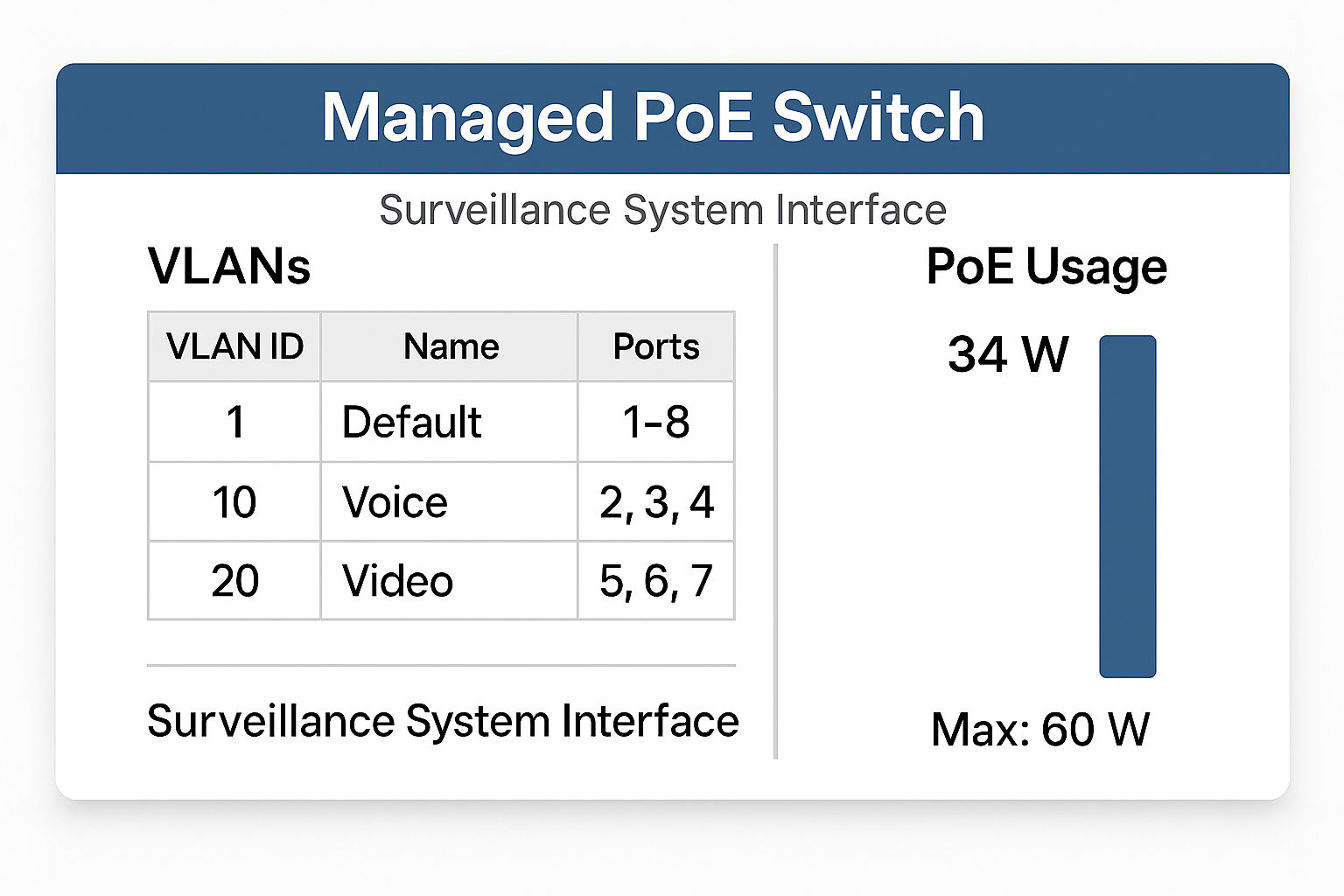
Managed PoE Switches
Recommended for:
-
-
- Anything over 6 cameras
- Commercial or enterprise installs
- Systems with NVRs and multiple subnets
-
Benefits:
-
-
- VLANs for camera isolation
- QoS for video traffic
- Easier diagnostics and future expansion
-
6.Common PoE Mistakes Installers Should Avoid
BLVS sees these issues repeatedly:
-
-
- Maxing out total PoE budget
- Using PoE instead of PoE+ for IR cameras
- No airflow in wall-mounted enclosures
- Mixing consumer networking gear with commercial cameras
- No planning for future camera upgrades
-
Avoiding these mistakes dramatically reduces service calls and downtime.
7.Final Recommendations for BLVS Customers
When selecting a PoE switch for a security camera system, focus on:
-
-
- Power headroom
- Commercial-grade reliability
- Scalability
- Compatibility with modern IP cameras
-
BLVS supports installers and integrators with:
-
-
- Commercial and enterprise security cameras
- System design guidance
- Accessories that actually match real-world installs
-
A properly chosen PoE switch ensures the cameras you deploy today will continue performing years down the line.
Shop Switches at BLVS.com !