Oct 6th 2026
NYC Local Law 157 Compliance Guide: What Building Owners Need Before the January 2027 Deadline
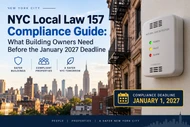
Learn who is affected by Local Law 157,
what natural gas detection equipment may be required, and how installers, integrators, and property managers can prepare before the January 1, 2027 compliance deadline.
What Is NYC Local Law 157?
As New York City continues to strengthen residential safety requirements, Local Law 157 establishes natural gas detection requirements for qualifying residential occupancies. The legislation is designed to provide earlier warning of natural gas leaks and improve occupant safety throughout multifamily housing environments.
For contractors, integrators, and property managers, understanding these requirements today can help avoid last-minute compliance challenges as the January 2027 deadline approaches.
Who Must Comply?
Local Law 157 primarily impacts residential buildings that contain fuel-gas-burning appliances.
Property owners should review current NYC requirements to determine their specific obligations.
| Building Type | Likely Impact |
|---|---|
| Apartment Buildings | Compliance Required |
| Multifamily Housing | Compliance Required |
| Mixed-Use Residential Buildings | Verify Requirements |
| Condominiums & Co-Ops | Typically Applicable |
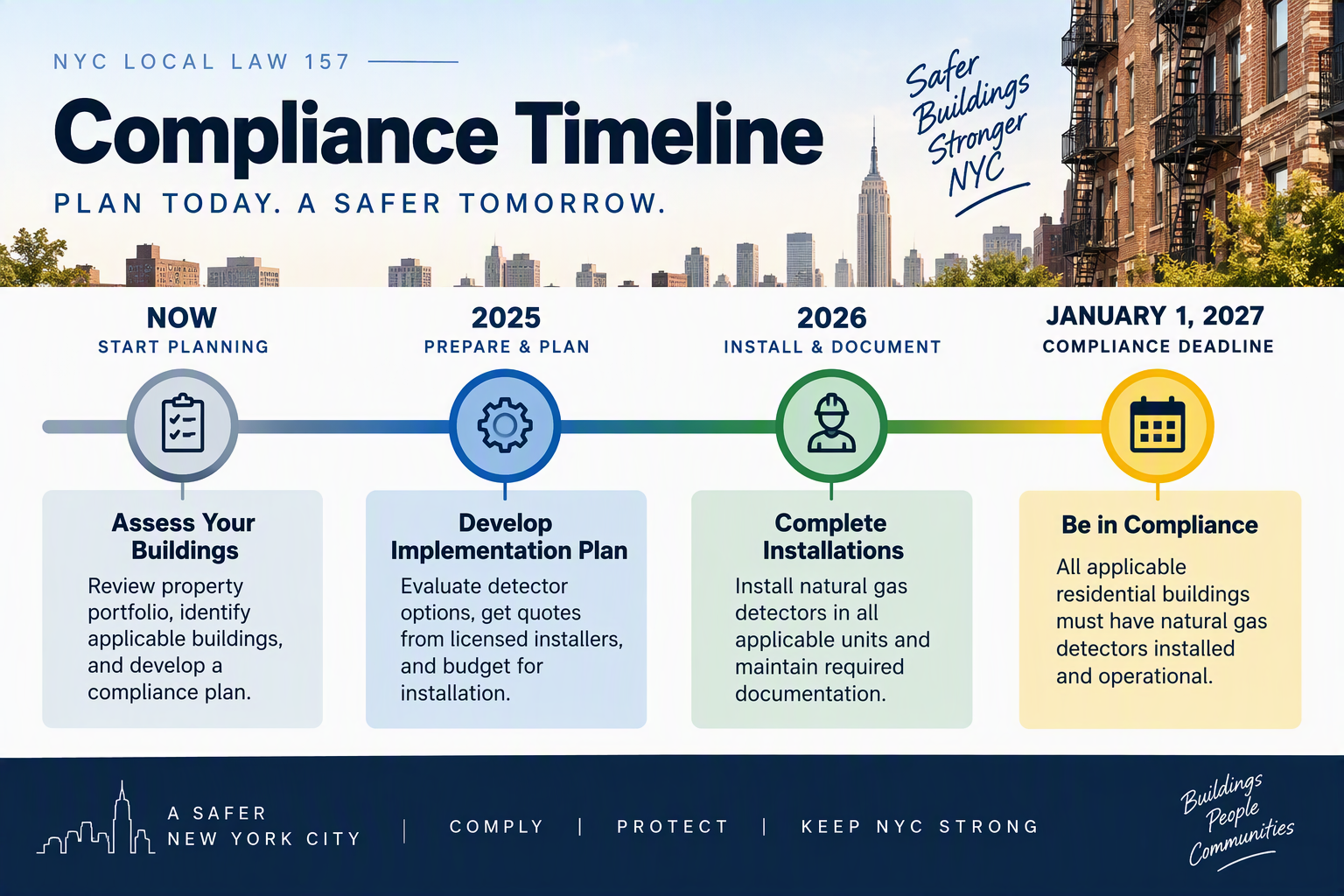
Why the January 2027 Deadline Matters
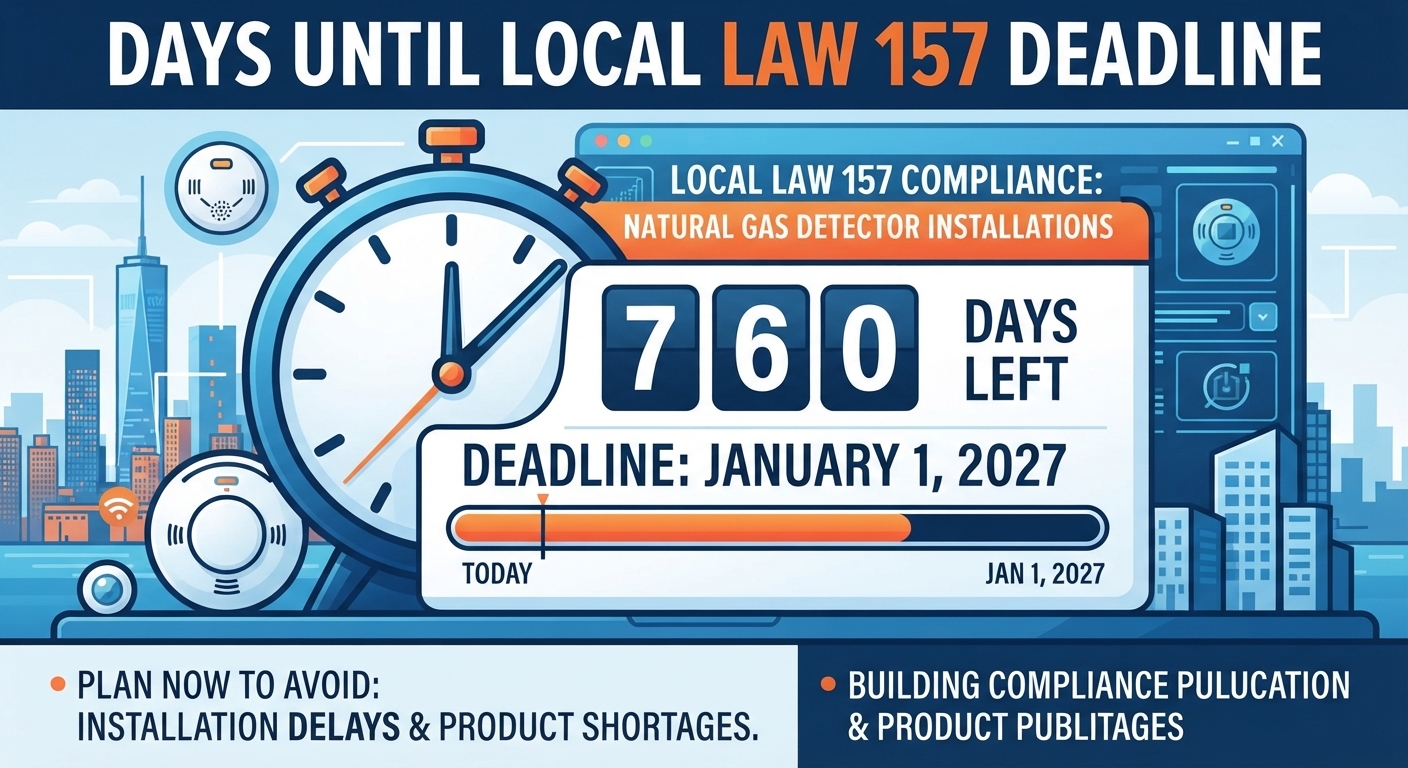
Although January 1, 2027 may seem far away, demand for compliant gas detection products and qualified installers is expected to increase significantly as the deadline approaches.
Plan Early to Avoid:
-
-
Product shortages
-
Installation delays
-
Inspection scheduling bottlenecks
-
Large-scale project disruptions
-
End-of-year compliance pressure
-
Gas Detector Requirements
Building owners should select products that meet applicable standards and code requirements.
While exact requirements should always be verified with current NYC regulations, most projects focus on products featuring:
-
- Natural gas detection capabilities
- Audible alarm notification
- Reliable sensor technology
- Residential safety certifications
- Long-term service reliability
Where Gas Detectors Should Be Installed
Proper detector placement plays a critical role in compliance and performance. Installation locations should follow manufacturer instructions and applicable code requirements.
-
- Near gas-burning appliances
- Residential dwelling units
- Kitchens utilizing gas ranges
- Other locations specified by applicable code
Beyond Compliance: Why Gas Detection Matters
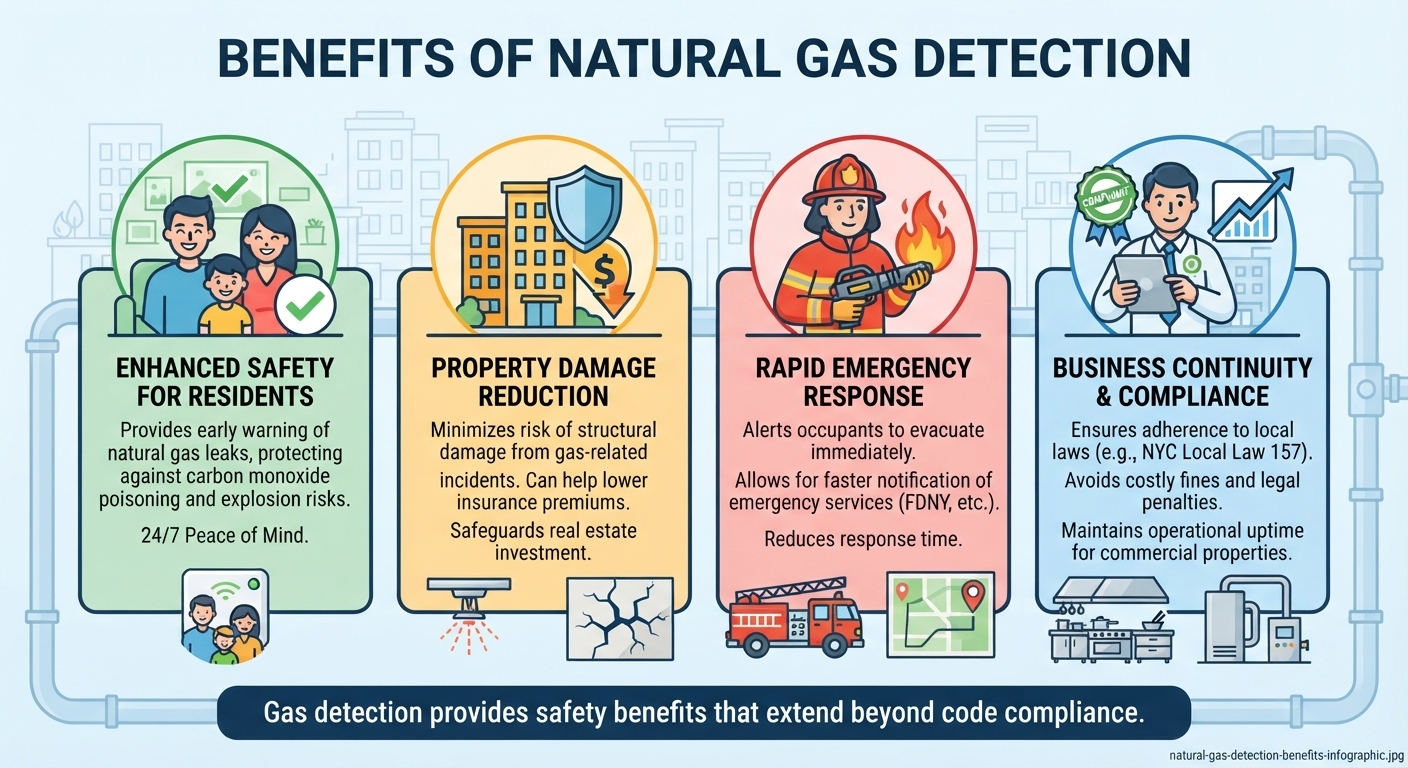
Local Law 157 is more than a regulatory requirement. Early gas leak detection can help protect occupants, reduce risks, and support broader building safety initiatives.
"The value of gas detection extends beyond code compliance. Early warning technology helps protect residents, property, and building operations every day."
-
- Improved resident safety
- Reduced property risk
- Enhanced emergency response
- Support for overall life safety initiatives
- Greater peace of mind for property managers
Recommended Gas Detection Solutions
BLVS is currently offering the WK-987 | BLVS.
Why the WK-987 Is Built for NYC Local Law 157
A Practical Solution for the January 2027 Deadline
The WK-987 Natural Gas Detector is designed to help New York City building owners and property managers prepare for Local Law 157.
Built specifically for methane (natural gas) detection, the WK-987 combines reliable gas monitoring with a simple, maintenance-friendly design suited for residential installations.
10-Year Protection Without Battery Changes
A sealed 10-year lithium battery provides continuous protection without routine battery replacement, while an 85 dB audible alarm, visual status indicators, and built-in self-diagnostics help ensure occupants receive a clear warning when natural gas is detected. Its compact design also supports installation near the ceiling, consistent with the placement requirements applicable to natural gas alarms.
Get Ahead of January 1, 2027 -
With New York City's January 1, 2027 compliance deadline approaching, property owners should plan installations early.
The WK-987 offers a straightforward way to equip apartments and residential properties with dedicated natural gas detection while reducing long-term maintenance requirements.
BLVS offers the WK-987 for property managers, building owners, contractors, and installers preparing residential properties for Local Law 157 requirements. Order while you can still make the deadline.
WK-987 | Natural Gas Detector 10YR Battery
Prepare for Local Law 157 Before the January 2027 Deadline
Installation Best Practices for Integrators
-
- Conduct a complete site survey
- Document appliance locations
- Verify applicable code requirements
- Follow manufacturer placement guidance
- Test every installed device
- Train on-site personnel
- Document acceptance testing results
Frequently Asked Questions
It is a New York City regulation requiring approved natural gas detection devices in applicable residential occupancies.
January 1, 2027.
Building owners and property managers are generally responsible for installation and maintenance compliance.
Early planning helps avoid product availability constraints, installation delays, and scheduling issues.
Local Law 157 Compliance Checklist
- ✅ Determine whether your building is subject to Local Law 157
- ✅ Identify fuel-gas appliance locations
- ✅ Review current code requirements
- ✅ Select approved gas detection products
- ✅ Schedule installations in advance
- ✅ Complete testing and documentation
- ✅ Train maintenance personnel
- ✅ Maintain inspection records
- ✅ Verify compliance before January 1, 2027